CoolSculpting is often treated as the default answer for stubborn fat reduction.
Want to get rid of belly fat that won't budge? CoolSculpting. Looking for a non-surgical body contouring treatment? CoolSculpting. Trying to avoid the downtime associated with surgery? Once again, CoolSculpting tends to be part of the conversation.
But things aren't quite that simple anymore.
Today, there are several ways to target unwanted fat, and each works differently. Some treatments use cold temperatures, others use heat, ultrasound energy, injections, or surgery. Some focus only on reducing fat, while others can also help improve skin firmness.
This naturally raises a question: if there are so many options available, is CoolSculpting really the best choice, or is it simply the most well-known?
The answer depends on what you're hoping to achieve.
The right treatment often depends on your specific concern. Someone looking to reduce a double chin may not need the same approach as someone targeting larger areas like the abdomen or thighs. Likewise, treatments that focus on skin tightening may be better suited for some people than those designed purely for fat reduction.
This is why comparing your options matters. While CoolSculpting remains a popular choice, treatments such as RF fat reduction, HIFU, fat-dissolving injections, liposuction, and Mounjaro each offer their own benefits and limitations.
So, how does CoolSculpting compare, and which treatment is best suited for your goals? Let’s figure it out!
CoolSculpting: Why It Continues to Be a Popular Choice
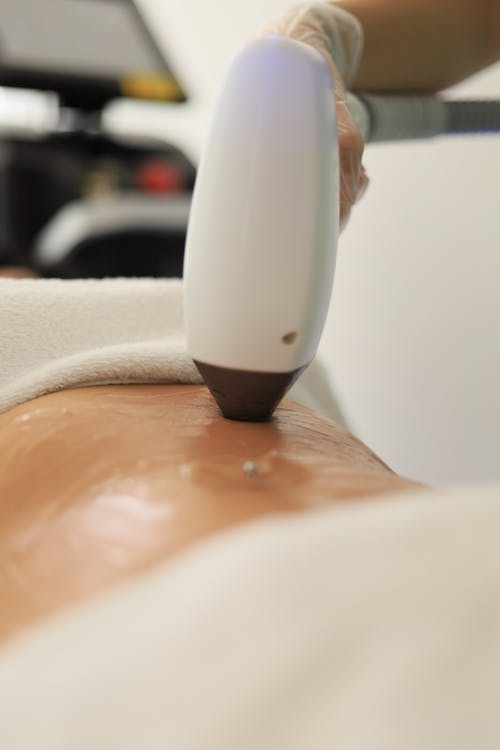
Many people reach a point where healthy eating and regular exercise have already become part of their routine, yet certain areas still refuse to change. At the same time, not everyone is comfortable with the idea of surgery.
This is where CoolSculpting has found its place. It offers a non-surgical option for people looking to address stubborn fat without taking the surgical route.
So, How Does CoolSculpting Actually Work?
The treatment uses controlled cooling technology to target fat cells beneath the skin. These fat cells are gradually broken down and naturally removed by the body over time.
Unlike weight-loss treatments that focus on overall body weight, CoolSculpting targets specific areas that may not respond as readily to lifestyle changes alone.
Which Areas Can Be Treated?
One reason the treatment is widely used is its versatility.
CoolSculpting can be used for areas such as the abdomen, flanks, thighs, upper arms, back, and under the chin. Because people store fat differently, the ability to treat multiple areas makes the treatment relevant to a wide range of body-contouring concerns.
Why Do People Choose CoolSculpting?
For many patients, convenience is a major factor.
There is no anesthesia involved, and most people can return to their normal activities soon after a session. Treatment appointments are also typically spaced apart, making them easier to fit into an already busy schedule.
Another reason is that the results develop gradually. Rather than creating an immediate and dramatic change, the treated fat cells are removed over time, which many people feel creates a more natural-looking outcome.
What Should You Keep in Mind Before Choosing It?
While CoolSculpting offers several advantages, it's important to approach it with realistic expectations.
Results take time to appear, and some people may require more than one session depending on their goals. Temporary redness, swelling, tenderness, or numbness can also occur after treatment, although these effects are generally short-lived.
It's also worth remembering that CoolSculpting is intended for body contouring, not significant weight loss. People looking for major fat reduction may benefit from exploring other treatment options.
There is also a rare side effect known as paradoxical adipose hyperplasia (PAH), where the treated fat tissue increases rather than decreases in size. Although uncommon, it highlights the importance of choosing the right treatment for the right concern.
CoolSculpting vs RF Fat Reduction
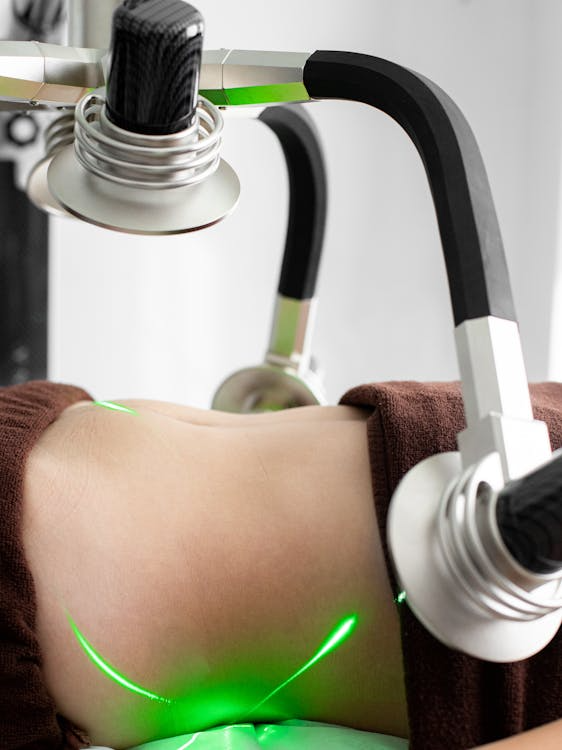
One of the most common situations seen in clinics is when a patient comes in asking for fat reduction, but then mentions something else during the consultation.
"I'd also like this area to look a little firmer."
That small detail can completely change the treatment discussion.
While CoolSculpting is primarily focused on reducing stubborn fat, RF body contouring often attracts people who are equally concerned about skin quality.
This is particularly common after weight loss, pregnancy, or age-related changes, where fat isn't always the only concern. Sometimes the issue isn't just what sits beneath the skin but how the skin itself looks and feels.
Another practical difference involves commitment.
CoolSculpting is often attractive to people who prefer fewer treatment appointments spread further apart. RF treatments typically involve a series of sessions, making them more suitable for individuals who don't mind a more involved treatment schedule.
As a result, the decision isn't always about technology. It's often about priorities.
If your main goal is reducing a stubborn area of fat with minimal interruption to your routine, CoolSculpting may be the more appealing option.
If improving skin firmness is equally important, RF treatments may deserve a closer look.
CoolSculpting vs HIFU Body Contouring
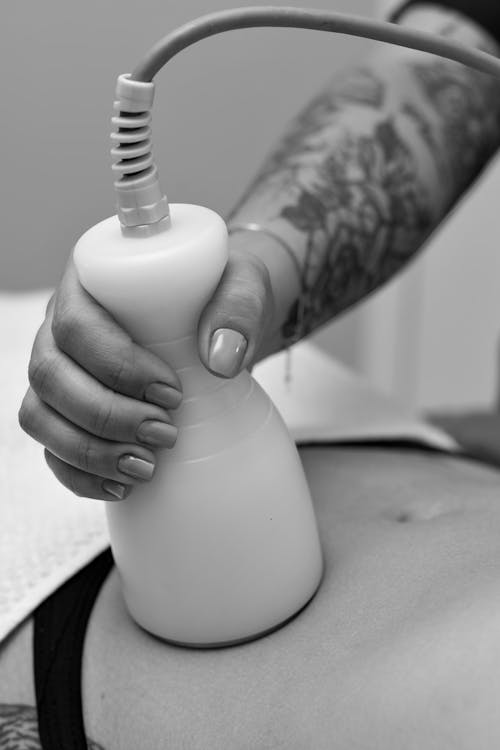
People often compare CoolSculpting and HIFU because both are non-surgical treatments. Neither involves incisions, stitches, or a long recovery period, which naturally makes them attractive to those who want body contouring without surgery.
But despite being placed in the same category, they are not always chosen for the same reasons.
A good example is someone who has recently lost weight. The number on the scale may be lower, but they still feel unhappy when they look at themselves. The issue isn't necessarily a large amount of fat. Sometimes it's a combination of mild fat deposits and skin that doesn't look as firm as it used to.
In situations like these, HIFU often becomes part of the discussion.
Many people are drawn to HIFU because they want more than just a reduction in fat. They want the treated area to look tighter and more refined as well. That's one reason the treatment has gained attention among individuals who feel their concern goes beyond stubborn fat alone.
CoolSculpting usually attracts a different type of patient.
Someone may be perfectly happy with the quality of their skin but frustrated by a specific bulge around the abdomen, flanks, thighs, or another area that doesn't seem to change despite regular exercise and healthy eating. Their main goal is reducing that stubborn pocket of fat, not necessarily improving skin firmness.
The treatment journey can feel different, too.
Some people prefer a treatment plan that requires fewer clinic visits and fits easily into a busy routine. Others don't mind returning for multiple sessions if the treatment aligns with their goals.
This is why the decision isn't really about which technology is better.
It's about identifying what bothers you most.
If your main concern is a stubborn area of fat that has been difficult to shift, CoolSculpting may be a suitable choice.
If you're equally focused on how firm and smooth the area looks, HIFU may be worth exploring.
For many patients, the answer becomes clearer once they stop asking, "Which treatment is better?" and start asking, "What exactly am I hoping to improve?"
CoolSculpting vs Fat-Dissolving Injections
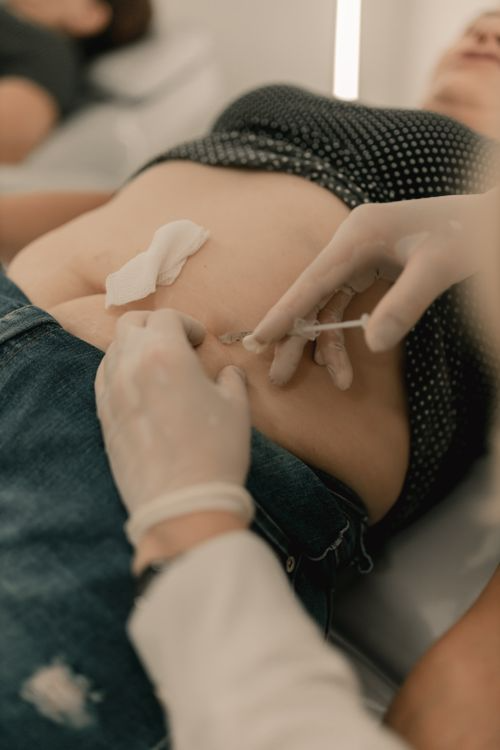
Not every body contouring concern involves the stomach, thighs, or love handles. Sometimes, the area causing the most frustration is surprisingly small.
A double chin is a good example.
Many people are comfortable with their overall weight and body shape but still feel bothered by the fullness beneath their chin. It can become more noticeable in photographs, video calls, and side-profile pictures, making it seem much larger than it actually is.
This is why fat-dissolving injections have become a popular option over the years.
Unlike treatments that are commonly used for larger body areas, fat-dissolving injections are often chosen for small, targeted concerns where precision matters. The goal isn't to reshape a large section of the body. It's to improve a specific area that stands out.
CoolSculpting can also be considered for under-chin fat, which is why many patients find themselves comparing the two treatments.
The decision often comes down to the size of the treatment area and the type of outcome a person is hoping to achieve.
For someone whose only concern is a small pocket of fat beneath the chin, injections may feel like a more focused approach. On the other hand, a person already planning body contouring for multiple areas may prefer a treatment that can address more than one concern as part of the same overall plan.
Another thing worth considering is that people often underestimate how different treatment goals can be.
Reducing fullness under the chin is a very different objective from contouring the abdomen or thighs. Trying to compare treatments without considering the area being treated can sometimes create unnecessary confusion.
Rather than asking which treatment is better overall, it may be more helpful to ask which treatment makes more sense for the area you want to improve.
For small and highly targeted concerns such as a double chin, fat-dissolving injections are often part of the conversation. For broader body contouring goals, CoolSculpting may offer greater flexibility.
CoolSculpting vs Liposuction
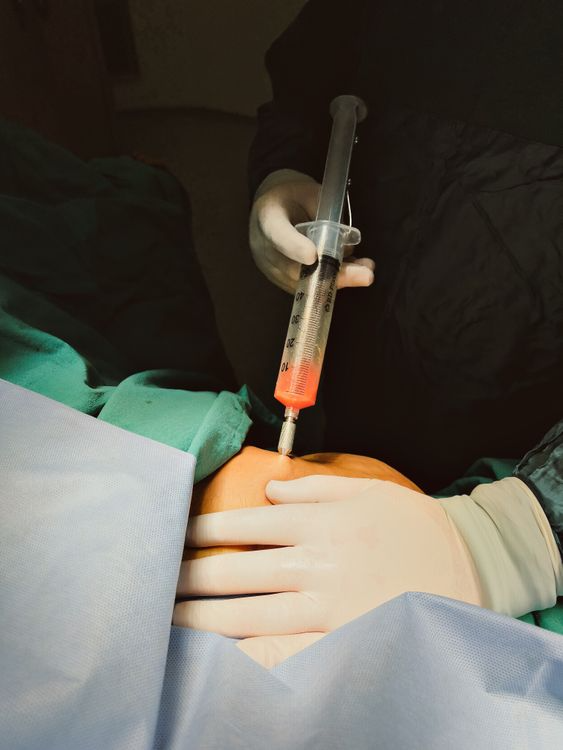
Many people compare CoolSculpting and liposuction as if they are direct competitors.
In reality, they are often chosen by people with very different expectations.
A person considering CoolSculpting is usually looking to improve a specific area that hasn't responded to diet and exercise. They may be happy with their overall shape but want to smooth out a stubborn bulge around the abdomen, flanks, thighs, or another area.
The goal is refinement. Liposuction conversations tend to be different.
People exploring liposuction are often looking for a more noticeable transformation. They may have larger areas of unwanted fat or simply want results that are difficult to achieve through non-surgical treatments alone.
This difference is important because it helps set realistic expectations from the beginning.
CoolSculpting can reduce stubborn fat, but it isn't designed to create the kind of dramatic change that surgical fat removal can often deliver. Liposuction remains one of the most effective options for larger-volume fat reduction and typically produces more immediate results.
Of course, those results come with a different experience.
Liposuction is a surgical procedure, which means recovery, downtime, and post-procedure care become part of the journey. Some people are comfortable with that trade-off because they are focused on achieving a bigger change.
Others prefer a treatment that allows them to return to their routine quickly, even if the results develop more gradually.
Neither approach is automatically better.
The real question is how much change you're hoping to see.
If your goal is to fine-tune a stubborn area without surgery, CoolSculpting may be enough.
If you're seeking a more significant reduction in fat and are comfortable with a surgical procedure, liposuction may be the stronger option.
In many consultations, the decision becomes surprisingly simple once expectations are discussed openly. The treatment choice often follows naturally from the type of result a person wants to achieve.
The Mounjaro Effect
Mounjaro has become one of the most talked-about names in the weight-loss space, and for good reason. Stories of significant weight loss have sparked curiosity among people who may have struggled with their weight for years.
Naturally, this has led many people to wonder whether treatments like CoolSculpting are still worth considering.
The truth is, these treatments are often helping people in very different situations.
Think about someone who feels that weight gain has affected their entire body over time. Their clothes fit differently, their energy levels may have changed, and their goal is to see a reduction in overall body weight. For them, the focus is much bigger than one stubborn area.
Now think about someone who is already close to their desired weight but can't stop looking at the small bulge around their lower abdomen or the fat sitting around their love handles. Even after making healthier choices and staying active, that particular area refuses to cooperate.
Both people are frustrated by body fat, but they're dealing with completely different challenges.
That's why Mounjaro hasn't replaced body contouring treatments. In many cases, it has simply changed the conversation.
Weight loss can reduce fat throughout the body, but it doesn't always determine exactly where the changes will happen or how the body will eventually look. Many people are surprised to find that even after losing weight, there are still areas they wish looked more defined.
That's where body contouring treatments continue to have a place.
At the end of the day, it isn't really a question of which option is better. The more useful question is what you're trying to achieve.
Are you hoping to lose weight overall?
Or are you trying to improve a specific area that has been bothering you for years?
Once that answer becomes clear, the decision often becomes much easier too.
So, Which Fat Reduction Treatment Makes the Most Sense for You?
After looking at all these options, it's easy to see why there isn't a single treatment that works best for everyone.
The right choice often depends less on the treatment itself and more on what you're hoping to achieve.
For example, someone bothered by a small pocket of fat beneath the chin may not need the same approach as someone looking to address larger areas around the abdomen or thighs. Likewise, a person who wants noticeable fat reduction may have very different expectations from someone who is equally concerned about skin firmness.
This is why consultations are so important. Two people can have similar concerns on the surface, but end up being better suited for completely different treatments.
In general, CoolSculpting is often considered by people who are close to their desired weight and want to improve specific areas that haven't responded as expected to healthy lifestyle habits.
RF body contouring may appeal to those who want fat reduction while also paying attention to skin firmness.
HIFU is often explored by people looking for overall contour improvement rather than focusing solely on reducing a stubborn fat pocket.
Fat-dissolving injections are frequently considered for smaller treatment areas where precision becomes important, particularly around the chin.
For larger-volume fat reduction, liposuction continues to be one of the most effective options available, although it involves a very different treatment experience compared to non-surgical procedures.
And for individuals whose primary goal is overall weight loss rather than body contouring, medical weight-management options such as Mounjaro may become part of the discussion.
Rather than focusing on which treatment is the newest, most popular, or most talked about, it often makes more sense to focus on which treatment aligns with your goals, expectations, and lifestyle.
The best results usually come from choosing the right treatment for the right concern, not from choosing the treatment that happens to be trending at the moment.
Frequently Asked Questions
Still comparing your options? Here are answers to some of the most common questions people ask before choosing a fat reduction treatment.
1. Can I choose CoolSculpting instead of liposuction?
Yes, if you're looking for a non-surgical option for stubborn fat. However, liposuction is generally better suited for larger-volume fat reduction and more dramatic results.
2. Which treatment is better for a double chin: CoolSculpting or fat-dissolving injections?
Both can be effective. Fat-dissolving injections are often preferred for smaller, targeted areas, while CoolSculpting may be suitable for some patients depending on the treatment plan.
3. Can CoolSculpting help me lose weight?
No. CoolSculpting is a body contouring treatment designed to reduce stubborn fat in specific areas, not overall body weight.
4. Why do some people choose RF fat reduction over CoolSculpting?
Many people consider RF treatments when they want fat reduction along with skin-tightening benefits.
5. Is HIFU better than CoolSculpting?
Not necessarily. The better option depends on your goals, treatment area, and whether concerns beyond fat reduction are part of the discussion.
6. Can stubborn fat remain even after losing weight?
Yes. Many people notice that certain areas hold onto fat despite weight loss, which is one reason body contouring treatments are so popular.
7. If I lose weight with Mounjaro, will I still need body contouring?
Possibly. Some people are happy with their results, while others choose body contouring to improve specific areas that remain resistant to change.
8. Which fat reduction treatment has the least downtime?
Most non-surgical treatments, including CoolSculpting, RF, HIFU, and fat-dissolving injections, involve minimal downtime compared to surgery.
9. How do I know which treatment is right for me?
The answer depends on your goals, treatment area, expectations, and lifestyle. A professional consultation can help identify the most suitable option.
10. Is there one fat reduction treatment that works best for everyone?
No. Every treatment has its own strengths, which is why the best choice varies from person to person.